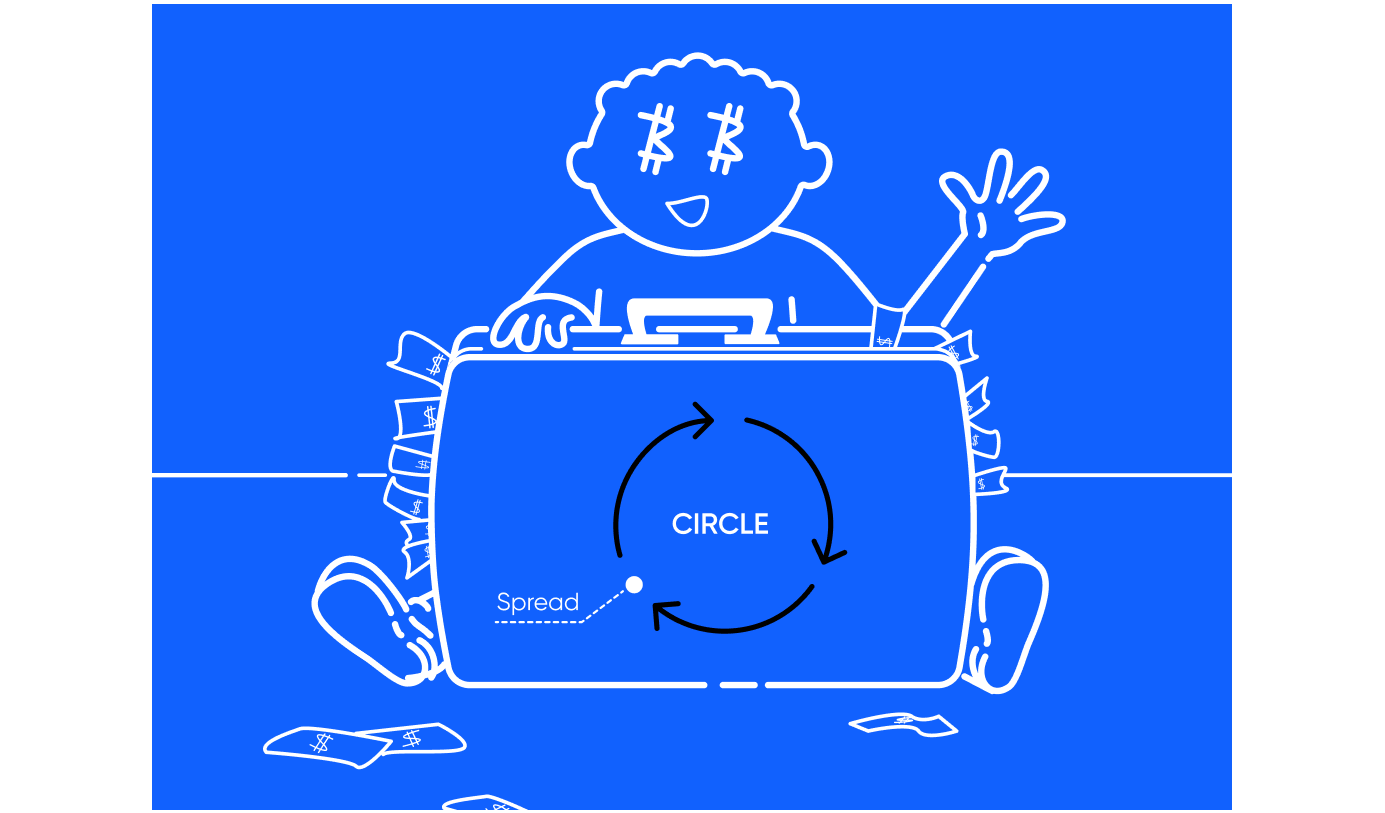
Cryptocurrency arbitrage is one of the oldest yet most resilient ways to earn money in the digital asset market. Despite the rapid rise of new trading strategies, automated systems, and derivatives, arbitrage remains relevant because it relies not on predicting the market, but on real, existing price differences.
In 2026, arbitrage has become even more accessible due to high liquidity, the availability of dozens of exchanges, and tools that allow traders to instantly track price discrepancies. To understand how this strategy works and whether it’s suitable for beginners let’s break everything down step by step.
What Is Crypto Arbitrage? A Simple Explanation
In classical economics, arbitrage refers to buying an asset on one market and simultaneously selling it on another at a higher price. The difference between the two prices is the arbitrageur’s profit.
Crypto arbitrage works exactly the same way. The key difference is that digital assets are traded not on a single exchange, like a company stock, but on dozens of platforms, each with its own liquidity, user base, and trading volumes.
Because of this, prices for the same asset can differ from exchange to exchange in real time. For example, BTC may cost $50,000 on Exchange A but $50,300 on Exchange B. The arbitrageur buys where the price is lower and sells where it’s higher, locking in immediate profit.
The core advantage of arbitrage is that it doesn’t require predicting market direction. Profit comes from objective price gaps, which makes arbitrage one of the lowest-risk trading strategies. Especially compared to speculation or long-term investing.
How Cryptocurrency Arbitrage Works
To understand the mechanics of arbitrage, it’s important to know why price differences exist at all. Each exchange has its own liquidity providers: retail users, institutional traders, algorithmic funds, and region-specific participants operating in their local currencies.
Because of this diversity, price movements occur with slight delays. One exchange may react faster, another slower, and a third might be partially inaccessible due to regulatory or geographic restrictions.
These factors create the spread - the price difference between exchanges. Once the spread is wide enough to cover fees and still provide profit, arbitrage becomes possible.
However, arbitrage is not risk-free. Withdrawals can be delayed, blockchain transactions can get stuck, transfers may be blocked, and volatility can erase profit within seconds. This is why arbitrage works not in “ideal market conditions,” but in real-world environments where speed is often the decisive factor.
Main Types of Cryptocurrency Arbitrage
Arbitrage isn’t limited to the classic “buy on one exchange, sell on another” approach. Several variations exist, each with its own level of complexity.
Inter-Exchange Arbitrage
The simplest and most popular form. A trader buys an asset on one exchange and sells it on another at a higher price. The main variables to consider are fees, transfer speed, and liquidity. This method is beginner-friendly, especially when working with stablecoins.
Triangular Arbitrage
This type occurs within a single exchange. A trader uses three trading pairs, for example:
BTC → ETH → USDT → BTC.
Each conversion happens at different price ratios. If the final amount exceeds the initial value, the trader earns a profit. This method doesn’t require withdrawing funds but does require precise calculation and fast execution.
Statistical Arbitrage
This approach uses mathematical models, algorithms, and historical data. It is suitable for experienced traders who use automation or algorithmic strategies. It often requires larger capital and more advanced tools.
CEX–DEX Arbitrage
Price differences between centralized exchanges (CEX) and decentralized exchanges (DEX) can be significant due to different liquidity models. This method requires understanding blockchain fees and how AMM pools operate.
Stablecoin Arbitrage
A separate and highly popular category. USDT, USDC, DAI, TUSD and other stablecoins frequently trade slightly above or below $1. These small deviations can create profitable arbitrage opportunities. Stablecoin arbitrage is considered one of the safest and easiest strategies for beginners.
Advantages and Disadvantages of Cryptocurrency Arbitrage
Arbitrage is often called a “safe way to earn in crypto,” but like any strategy, it has both strengths and limitations.
Advantages
- Profit is realized immediately without needing to predict market growth.
- Arbitrage works even in volatile markets.
- Capital turnover is high.
- The strategy is suitable for both beginners and professionals
Disadvantages
- Withdrawal and deposit fees can significantly reduce profit.
- Transfers between exchanges take time and may cause missed opportunities.
- Large transfers can draw attention from banks.
- P2P transactions may result in account freezes due to third-party transfers.
Because of these risks, it’s crucial to use reliable, licensed platforms to avoid suspicious transactions and compliance issues.
Crypto Arbitrage and Banks: What You Need to Know
Banks in many countries, including Georgia, treat crypto-related transfers with caution, especially when funds come from private individuals on P2P platforms. (You can read more about the situation in Georgia in this article.)
If money arrives from an unknown sender, a bank may temporarily freeze the account for compliance checks. This is not hostility toward crypto, it’s standard AML procedure.
To avoid issues, it is important to:
• keep documentation confirming your transactions,
• work only with trusted exchanges and licensed crypto service providers,
• understand that large transactions always require legal transparency.
FAQ: Common Questions About Cryptocurrency Arbitrage
Can you make consistent profits with arbitrage?
Yes, but returns depend on execution speed, exchange access, and market volatility.
How much capital do you need to start?
Arbitrage is possible even with $100, but meaningful profits usually begin with $1,000–2,000.
Is arbitrage suitable for beginners?
Yes, especially stablecoin arbitrage and simple inter-exchange strategies.
Can you perform arbitrage without verifying your identity?
Only on unregulated platforms — but this carries high risks of blockages and legal problems.